Water is one of those things most people rarely think about until something seems wrong. Maybe there’s an odd taste in the morning, white scale around the faucet, or a faint smell that wasn’t there before. Sometimes the issue is obvious. Other times, water can look perfectly clear while still containing substances that homeowners would rather not have in their drinking water.
The good news is that water treatment doesn’t have to be mysterious. Once you understand what may be present and why different treatment methods exist, choosing a solution becomes much easier. The important part is matching the treatment to the actual water-quality problem rather than buying equipment simply because it sounds advanced.
Start by Understanding What Is in Your Water
Water quality can vary dramatically depending on whether a home receives municipal water, private well water, or another local supply. Even two houses in the same neighborhood may experience different problems because of plumbing materials, building age, groundwater conditions, or household infrastructure.
Testing is therefore a sensible first step. A basic water test can provide information about hardness, pH, minerals, and common contaminants. More detailed laboratory testing may be appropriate when there are concerns about specific substances.
One contaminant that sometimes receives particular attention is lead. It can enter drinking water through certain plumbing components or older service lines, especially when water has been in contact with those materials for an extended period. Because lead exposure is a health concern, suspected contamination should be investigated carefully rather than addressed with guesswork.
Testing also helps separate genuine water-quality concerns from harmless characteristics. For example, mineral content can affect taste without necessarily indicating that water is unsafe. Knowing the difference saves money and prevents unnecessary treatment.
Nitrates Deserve Special Attention
Another issue homeowners may encounter, particularly with private wells, is nitrates. These compounds can enter groundwater through sources such as agricultural runoff, fertilizers, septic systems, and naturally occurring processes.
Nitrate concerns are different from problems such as hardness or unpleasant taste. A water softener, for example, isn’t designed to remove every contaminant. That’s why identifying the actual substance matters before selecting equipment.
If testing shows elevated nitrate levels, homeowners should discuss the results with an appropriate water-quality professional and consider treatment options specifically designed for nitrate reduction. Families with infants or other vulnerable household members should take drinking-water concerns seriously and follow advice from qualified health or water authorities.
It’s tempting to think that boiling questionable water will solve everything. Unfortunately, boiling can concentrate some dissolved substances rather than remove them. Treatment needs to be based on the contaminant involved.
Hard Water Is a Different Kind of Problem
Hard water is generally associated with dissolved calcium and magnesium. It may leave chalky deposits on showerheads, faucets, glassware, and appliances. You might also notice that soap doesn’t lather quite the way it used to.
This is where water softeners can be useful. Their primary job is to reduce hardness minerals, helping limit scale formation and making everyday cleaning and bathing more convenient.
For many households, the benefits are less about dramatic changes in drinking water and more about protecting plumbing and appliances. A water heater with heavy mineral scale, for instance, may operate less efficiently. Fixtures can also require more frequent cleaning.
Still, a softener isn’t a universal filtration system. It shouldn’t be treated as a solution for every possible contaminant. If a water test identifies bacteria, nitrate, lead, volatile organic compounds, or another specific concern, additional treatment may be necessary.
That distinction is worth remembering because water treatment is rarely a one-size-fits-all business.
Where Reverse Osmosis Fits In
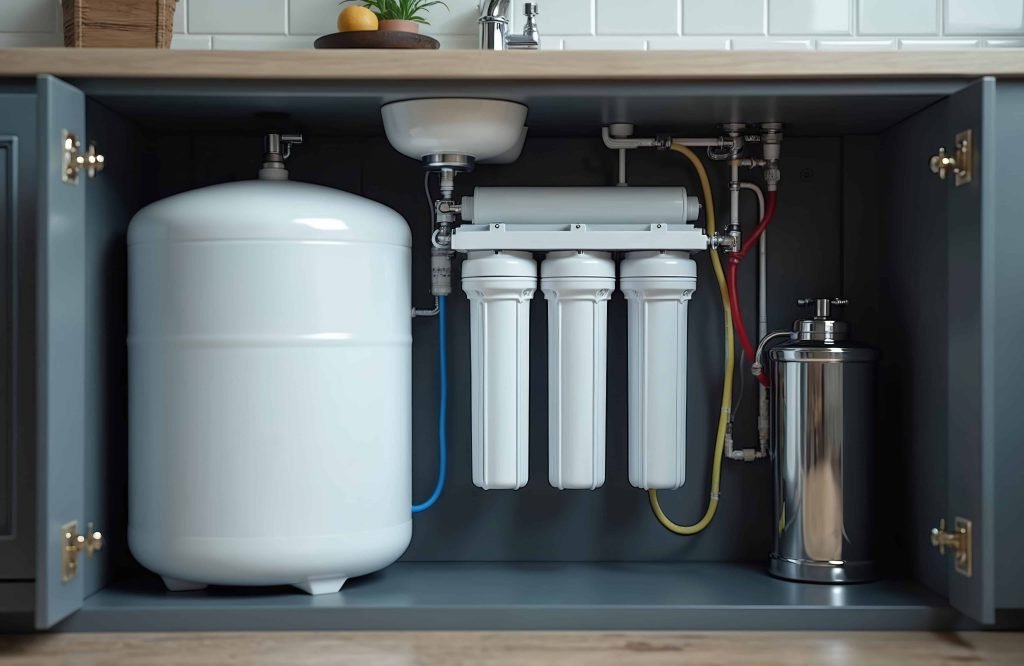
For drinking and cooking water, reverse osmosis systems are among the treatment technologies homeowners often consider when they want a higher level of filtration. Reverse osmosis uses pressure to push water through a semipermeable membrane, reducing many dissolved substances and impurities.
The technology can be particularly useful when testing identifies dissolved contaminants that conventional sediment or carbon filters aren’t intended to address. Many systems also combine reverse osmosis with prefilters and post-filters to improve performance and taste.
There is, however, a practical consideration: reverse osmosis can produce a stream of reject water during operation, and the system requires periodic filter and membrane replacement. Installation quality matters too. A poorly maintained system isn’t going to perform as intended.
For that reason, homeowners should look beyond the equipment label. Ask what the system is certified to reduce, how often components need replacing, and whether its capacity matches household demand.
Don’t Ignore Everyday Water Taste and Odor
Not every water problem is a serious contamination event. Sometimes the complaint is simply that the water tastes unpleasant or smells like chlorine.
Activated carbon filtration can help with certain taste and odor issues and may reduce some organic compounds, depending on the filter and its certification. But again, the details matter. A carbon filter designed for chlorine isn’t automatically a solution for every dissolved contaminant.
This is why certification and performance claims are more useful than broad marketing language. Look for documentation showing what a particular filter is designed to reduce.
There’s also a maintenance lesson here. Filters collect the substances they are designed to capture, and eventually they need replacement. Leaving an old cartridge in place for far too long defeats the purpose of having a filtration system in the first place.
Think About the Whole House, Not Just the Kitchen
A drinking-water filter and a whole-home treatment system serve different purposes.
If your primary concern is water used for drinking and cooking, point-of-use treatment may be enough. If hard water is damaging fixtures throughout the property, whole-home conditioning makes more sense.
The same thinking applies to well water. A well may have mineral, bacterial, sulfur, iron, manganese, or other water-quality characteristics that require a combination of treatment methods. There isn’t much value in installing expensive equipment that doesn’t address the actual problem.
A good treatment plan usually begins with three simple questions: What is in the water? What needs to be removed or reduced? Where does treatment need to happen?
Those questions sound basic, but they can prevent a lot of wasted money.
Maintenance Is Part of Water Treatment
Buying a treatment system is only the beginning. Filters need changing, membranes need servicing, softeners may require salt or other maintenance, and equipment should be inspected according to the manufacturer’s recommendations.
It’s easy to forget these jobs because the system sits quietly in a basement, utility room, garage, or beneath the kitchen sink. Out of sight, out of mind. But water treatment equipment works best when it is maintained consistently.
Keep records of filter changes and service visits. If water suddenly develops a new taste, odor, or appearance, don’t assume the system is still working normally. Retesting can be a simple way to find out what changed.
Better Water Decisions Begin With Better Information
Clean, reliable water isn’t about buying the most complicated filtration system on the market. It’s about understanding your water and choosing treatment that matches your circumstances.
Testing can reveal whether the concern involves hardness, dissolved minerals, a particular contaminant, taste, odor, or something else entirely. From there, the right combination of filtration, conditioning, or specialized treatment becomes much easier to determine.
And sometimes the best decision is surprisingly simple: fix a plumbing issue, replace an old filter, or address a specific source of contamination rather than installing an entire collection of equipment.
Water deserves that kind of thoughtful approach. After all, it’s something we use every day, often without giving it a second thought. A little testing, sensible treatment, and regular maintenance can go a long way toward making that everyday resource cleaner, more dependable, and easier to trust.