Water is one of those things you rarely think about until something feels off. Maybe the coffee tastes a little strange, the shower leaves a film on the glass, or your laundry just doesn’t seem as fresh as it used to. These aren’t always major problems, but they can be signs that your home’s water deserves a closer look.
The good news is that understanding water quality doesn’t have to involve complicated chemistry or a shelf full of gadgets. A little testing, some attention to household habits, and the right treatment approach can go a surprisingly long way.
Start by Understanding What’s in Your Water
Water quality depends heavily on where your water comes from. Municipal water goes through treatment before reaching your home, while private wells can vary considerably depending on local soil, rocks, groundwater conditions, and seasonal changes.
Even within a single neighborhood, water can behave differently from one house to another. Plumbing materials, water heaters, storage tanks, and household fixtures can all influence what you experience at the tap.
That’s why assumptions aren’t particularly helpful. Before spending money on a filtration or softening system, it makes sense to understand the actual characteristics of your water.
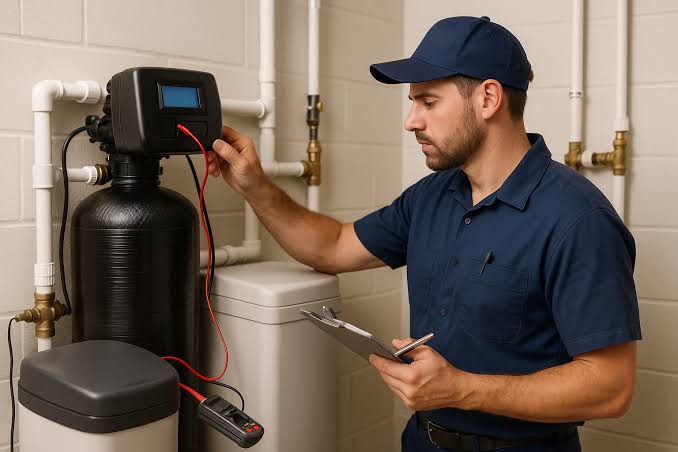
A free water testing offer can be a convenient starting point, especially when you’re trying to identify obvious concerns such as hardness, chlorine, iron, or sediment. Just ask what the test measures and how the results are determined. A basic demonstration isn’t necessarily the same as a comprehensive laboratory analysis.
Hard Water Can Create Small, Annoying Problems
Hard water is common, particularly in areas where groundwater passes through mineral-rich rock. Calcium and magnesium are the primary minerals responsible.
They’re not necessarily something you need to panic about, but they can certainly make household chores more irritating.
White deposits can appear around faucets. Shower doors develop spots. Glassware may look cloudy even after washing. Soap and shampoo may not lather as easily as you’d expect.
Over time, mineral scale can also accumulate inside plumbing fixtures and water-using appliances.
This is where understanding water softener highlights becomes useful. A conventional water softener is designed specifically to reduce hardness minerals, helping limit scale and making soap perform more effectively.
But not every home needs a softener. If your water is only mildly hard and the effects don’t bother you, investing in one may not be worthwhile. Testing first gives you a much clearer basis for making that decision.
Your Cleaning Routine May Be Telling You Something
Sometimes you notice water quality through cleaning rather than drinking.
You wipe down a faucet, and white spots return the next morning. You scrub the shower glass, only to find a hazy film a few days later. You’re using more soap, detergent, or cleaning products, yet the results aren’t improving much.
Hard water can contribute to these frustrations because minerals interact with soaps and detergents and can leave deposits behind.
Softer water may make cleaning easier because there are fewer hardness minerals interfering with soap performance. You might find that less detergent is needed for certain household tasks.
Still, water treatment isn’t a replacement for regular cleaning. Unfortunately, there is no magic filter that makes the bathroom clean itself. If only.
The real benefit is reducing one source of residue so routine cleaning doesn’t feel like such an uphill battle.
Taste and Odor Deserve Attention
Water doesn’t have to look cloudy to taste unpleasant.
Chlorine is commonly used to disinfect public water supplies, and some people are particularly sensitive to its taste or smell. Minerals, sulfur compounds, and other characteristics of source water can also affect flavor.
If your drinking water suddenly tastes different, don’t automatically assume you need an expensive treatment system.
First, check whether the change is happening throughout the home. Try another faucet. Consider whether there has been recent plumbing work or a change in the municipal supply.
If the change persists, water testing can help determine what’s actually happening.
Carbon filtration is often used to improve taste and reduce chlorine, while other treatment technologies target different substances. The right solution depends on the specific problem.
Not Every Filter Does the Same Job
This is one of the easiest things to overlook when shopping for water treatment.
A sediment filter is designed to capture particles. Activated carbon can improve taste and reduce certain chemicals. Water softeners address hardness. Reverse osmosis can reduce many dissolved substances.
Related reading: The Sun Lamp Under My Sink (And Why It’s Actually There)
These technologies aren’t interchangeable.
A filter marketed as excellent for chlorine isn’t necessarily designed to reduce nitrates or heavy metals. Likewise, a softener isn’t a general-purpose drinking-water purifier.
Before purchasing equipment, check the manufacturer’s performance claims and look for appropriate third-party certifications when available.
In other words, don’t buy a system because it has the longest feature list. Buy it because it addresses something your water actually needs.
Think About Where Treatment Makes Sense
Do you need treated water throughout the entire house?
Maybe. Maybe not.
If your main concern is drinking and cooking water, a point-of-use system under the kitchen sink may be enough. If chlorine odor, sediment, or another issue affects multiple fixtures, whole-house treatment might make more sense.
Household size matters, too. A family of six will have very different water demands from someone living alone.
Think about your daily routine. How much water do you use? Where do you notice problems? Which issues genuinely bother you?
These questions can help prevent you from paying for treatment you don’t really need.
Maintenance Is Part of the Equation
Even the best water treatment system requires some attention.
Filters need to be replaced. Softener salt needs monitoring. RO membranes eventually require servicing. Housings and other components may need cleaning.
Ignoring maintenance can reduce performance and sometimes create new problems.
Keep a simple record of filter replacement dates and routine service. You don’t need anything fancy. A reminder on your phone is enough.
When choosing a system, also check how easy it is to find replacement cartridges and what they cost. An inexpensive system that uses difficult-to-find filters can become frustrating over the years.
Look Beyond the Initial Price
The purchase price is only one part of the cost.
Installation, replacement filters, salt, electricity, maintenance, and professional servicing can all add to the long-term expense.
A cheaper system isn’t necessarily a better bargain if it requires frequent maintenance. At the same time, an expensive system isn’t automatically superior.
Try to compare total ownership costs rather than focusing only on the price tag.
Better Water Starts With a Better Decision
Improving your home’s water quality doesn’t have to be complicated.
Start by understanding your water source. Test when appropriate. Pay attention to changes in taste, odor, staining, scale, and cleaning performance. Then choose treatment equipment based on actual needs rather than marketing claims.
The goal isn’t to create the most sophisticated water-treatment setup possible.
It’s to make everyday water work better for your household.
Sometimes that means a simple filter. Sometimes it’s a water softener. And sometimes, after testing, you discover that you don’t need anything at all.
That’s a pretty good outcome, too. Knowing what your water needs — and what it doesn’t — is often the smartest improvement you can make.